294 月/24

What is the antibody humanization protocol?-KMD Bioscience

The antibody humanization protocol involves a series of technical steps designed to modify a non-human (often murine) antibody to resemble more closely the structure and properties of human antibodies, reducing its immunogenicity when administered to humans. This process retains the antibody’s specificity and affinity for its antigen. Here’s an overview of a typical antibody humanization protocol:

Selection of Parental Antibody

Objective: Identify a non-human antibody with high specificity and affinity for the target antigen.

Process: Screening and selection based on antigen-binding characteristics.

Characterization of the Parental Antibody

Objective: Understand the structure and binding properties of the antibody.

Process: Sequencing the antibody genes, determining the crystal structure of the antigen-antibody complex (if possible), and identifying the complementarity-determining regions (CDRs) and framework regions (FRs).

Selection of Human Framework

Objective: Choose a human antibody framework that is compatible with the non-human CDRs.

Process: Database search for human antibodies with similar framework sequences and structural compatibility with the parental antibody.

CDR Grafting

Objective: Graft the non-human CDRs onto the selected human antibody framework.

Process: Synthesize genes encoding the chimeric variable regions (human framework + non-human CDRs) and clone them into an expression vector.

Molecular Modeling and Optimization

Objective: Ensure the grafted CDRs adopt the correct conformation for antigen binding.

Process: Use computational modeling to predict the structure of the humanized antibody and identify any framework residues that might need modification to support the structure of the CDRs.

Synthesis and Expression of Humanized Antibody

Objective: Produce the humanized antibody in a suitable host system.

Process: Transfect mammalian cells (e.g., CHO cells) with the expression vector containing the humanized antibody genes, followed by culturing and purification of the antibody.

Verification of Antigen-Binding Affinity and Specificity

Objective: Confirm that the humanized antibody retains the antigen-binding characteristics of the parental antibody.

Process: ELISA, surface plasmon resonance (SPR), or other binding assays to compare the affinity and specificity of the humanized antibody against the target antigen with that of the parental antibody.

Optimization and Back-Mutation (if necessary)

Objective: Optimize the performance of the humanized antibody.

Process: Introduce back-mutations (selective reversion of certain framework residues to their original non-human sequences) or other modifications based on structural and functional analysis to improve antigen-binding affinity or antibody stability.

Preclinical and Clinical Development

Objective: Assess the safety, efficacy, and pharmacokinetics of the humanized antibody in preclinical models and clinical trials.

Process: In vivo studies in animal models, followed by phase I, II, and III clinical trials in humans to evaluate the therapeutic potential and safety profile of the humanized antibody.

This protocol outlines the complex and iterative process of antibody humanization, involving a combination of molecular biology, genetic engineering, computational modeling, and biophysical analyses. Successful humanization can lead to the development of therapeutic antibodies with reduced immunogenicity and improved clinical outcomes for patients.
254 月/24

KMD Bioscience Decoding Humanized Antibody Therapy: Revolutionizing Precision Medicine

In modern medicine, the advent of humanized antibody therapy stands as a pivotal milestone, reshaping the landscape of disease treatment and management. With its profound implications for precision medicine, humanized antibody therapy has emerged as a cornerstone in the arsenal of therapeutic interventions. This article endeavors to illuminate the essence of humanization in antibody therapy, deciphering its meaning, significance, and transformative potential.

Unveiling Humanization Meaning in Antibody Therapy

Humanization, in the context of antibody therapy, embodies a sophisticated engineering endeavor to bridge the gap between non-human antibodies and their human counterparts. At its core, humanization entails the process of modifying antibodies derived from non-human sources, such as mice, to mimic the structure and function of human antibodies closely. This intricate transformation is accomplished through genetic engineering techniques, meticulously crafting chimeric molecules that retain the antigen-binding specificity while mitigating immunogenicity concerns.

The Essence of Humanization

At the heart of humanization lies a fundamental quest to circumvent the immunological barriers inherent in conventional antibody-based therapies. By imbuing therapeutic antibodies with a humanized framework, scientists endeavor to circumvent the immune system’s recognition of foreign antigens, thereby mitigating the risk of adverse reactions and bolstering therapeutic efficacy. The crux of humanization lies in preserving the antigen-binding capacity of the antibody while minimizing its immunogenicity, thus heralding a new era of precision medicine.

Deciphering Humanized Antibody Therapy

Humanized antibody therapy represents a paradigm shift in the treatment landscape, offering tailored interventions that resonate with the unique genetic makeup of individual patients. Through the strategic fusion of non-human antigen-binding domains with human antibody frameworks, humanized antibodies epitomize the synergy between biotechnology and clinical innovation. By harnessing the innate specificity and versatility of antibodies, humanized antibody therapy affords clinicians a versatile tool to combat a myriad of diseases, ranging from cancer to autoimmune disorders and beyond.

Advancing Precision Medicine

The ascent of humanized antibody therapy heralds a transformative epoch in the annals of precision medicine, empowering clinicians with targeted interventions that transcend traditional therapeutic modalities. With its unparalleled capacity to reconcile therapeutic efficacy with immunological compatibility, humanized antibody therapy epitomizes the quintessence of personalized medicine. As researchers continue to unravel the intricate nuances of humanization, the horizon of therapeutic possibilities expands, promising new vistas of hope and healing for patients worldwide.

Conclusion

In conclusion, humanized antibody therapy stands as a beacon of innovation, illuminating the path toward precision medicine’s zenith. Through the artful fusion of scientific ingenuity and clinical acumen, humanization transcends conventional therapeutic paradigms, offering a transformative paradigm shift in disease treatment. As we navigate the uncharted terrain of biomedical innovation, humanized antibody therapy emerges as a cornerstone in the edifice of personalized medicine, heralding a future where tailored interventions usher in an era of unparalleled healing and hope.

224 月/24

What is the purpose of humanization?

What is the purpose of humanization?

– The purpose of humanization of antibodies revealed by KMD Bioscience

The purpose of humanization, particularly in the context of humanized antibodies, is to modify antibodies derived from non-human sources (such as mice) to more closely resemble human antibodies. This process is crucial in the development of therapeutic and diagnostic antibodies, aiming to reduce immunogenicity and improve clinical efficacy when humanized antibodies are administered to human patients. Let’s break down the concept further:

Define Humanization

Humanization refers to the biotechnological process of modifying the molecular structure of non-human antibodies (usually murine) by grafting their antigen-binding regions (the complementarity-determining regions, CDRs) onto the framework of a human antibody. This modification is achieved through genetic engineering techniques, where only the minimal necessary non-human sequences (mainly the CDRs responsible for antigen specificity) are retained, and the majority of the antibody structure is made identical to that of natural human antibodies.

Purpose and Benefits of Humanized Antibodies

Reduced Immunogenicity: The primary goal of humanization is to minimize the immune response against the therapeutic antibody. Non-human antibodies can be recognized as foreign by the human immune system, leading to the production of anti-drug antibodies (ADAs) that can neutralize the therapeutic antibody or cause allergic reactions. Humanized antibodies, by being more similar to human antibodies, are less likely to be recognized as foreign, reducing the risk of immunogenic reactions.

Improved Efficacy: By reducing the immunogenicity of the antibody, humanization helps maintain the therapeutic efficacy of the antibody over time, as fewer neutralizing antibodies are generated against it. This is particularly important in chronic conditions where long-term treatment is required.

Enhanced Half-Life: Humanized antibodies typically have a longer half-life in the human body compared to murine antibodies, allowing for less frequent dosing and, potentially, better patient compliance.

Broad Applicability: Humanized antibodies can be designed to target a wide range of antigens, making them versatile tools for treating various diseases, including cancers, autoimmune diseases, and infectious diseases.

In conclusion, the humanization of antibodies represents a significant advancement in biotechnology, offering a pathway to develop safer, more effective therapeutic agents. This process underscores the critical intersection of immunology, genetic engineering, and clinical medicine in the quest to provide better treatment options for a wide array of diseases.

184 月/24

KMD Bioscience Reveals Three Strategies for the Antibody humanization

Antibody humanization strategies are critical for developing therapeutic antibodies that are effective and minimally immunogenic in humans. These strategies aim to reduce the immune response against therapeutic antibodies derived from non-human species, typically mice. The three primary approaches are CDR grafting, chimeric antibody, and fully human antibody, each with its unique methodology and implications for therapeutic use.

CDRGrafting Antibody Humanization

CDR grafting is the most refined approach to antibody humanization, focusing on transferring only the antigen-binding regions from a mouse antibody to a human antibody framework.

-Methodology: This technique involves identifying the complementarity-determining regions (CDRs) of a mouse antibody that are responsible for antigen binding. These CDRs are then grafted onto a human antibody framework. The process often requires further refinement to maintain the antigen-binding affinity and specificity of the original mouse antibody, which might involve modifying some amino acids in the human framework regions to accommodate the mouse CDRs better.

– Advantages: The result is an antibody that retains the high specificity and affinity of the original mouse antibody for its target antigen but is significantly less immunogenic in humans.

– Applications: CDR grafting antibody is widely used in therapeutics, especially for chronic conditions where the reduced immune response against the therapeutic antibody is crucial for long-term treatment efficacy.

Chimeric Antibody

Chimeric antibody represent an earlier step in the evolution of antibody humanization, consisting of a more substantial mouse component than CDR grafting antibody.

– Methodology: In this approach, the entire variable regions of the mouse antibody (which include the CDRs) are combined with the constant regions of a human antibody. This results in a hybrid antibody with the variable (antigen-binding) region derived from a mouse and the constant region from a human.

– Advantages: Chimeric antibody significantly reduce the human immune response against the therapeutic antibody compared to fully mouse antibody, while still retaining the mouse antibody’s specificity for the target antigen.

– Applications: They have been successfully used in various therapeutic applications, including cancer and autoimmune diseases. Rituximab, used in the treatment of B-cell non-Hodgkin lymphoma, is a well-known example of a chimeric antibody.

Fully Humanized Antibody

Fully human antibodies are generated without incorporating mouse protein sequences, thereby minimizing the risk of immunogenicity.

– Methodology: These antibodies are produced either through phage display technology or from mice that have been genetically engineered to produce human antibodies. In phage display, libraries of human antibody genes are screened to identify those that bind to the target antigen. Genetically modified mice, on the other hand, are immunized with the antigen of interest, and their immune cells are used to create fully humanized antibodies.

– Advantages: Since these antibodies are entirely human, they are the least likely to be recognized as foreign by the human immune system, minimizing immune responses against them.

– Applications: Fully human antibody is increasingly becoming the standard for new therapeutic antibody development, with applications across a wide range of diseases, including inflammatory disorders and cancers. Adalimumab, used for treating rheumatoid arthritis, is an example of a fully human antibody.

Each of these antibody humanization strategies has contributed significantly to the advancement of therapeutic antibodies, offering options for tailoring treatment to minimize immunogenicity while maximizing therapeutic efficacy. The choice of strategy depends on the specific requirements of the therapeutic application, including the need for reduced immunogenicity, high specificity, and affinity for the target antigen.

KMD Bioscience provides quality assurance for antibody humanization service, including mice, rats, rabbits, etc. Humanization monoclonal antibody refers to the process of tailoring non-human monoclonals to work within human immune systems in an effort to minimize immunogenicity while increasing therapeutic efficacy by including human antibody sequences into existing non-human frameworks. Humanizing monoclonal antibody development typically begins by selecting an existing non-human monoclonal antibody with desirable binding specificity and affinity to serve as its starting point for humanization.

154 月/24

Method for Humanization of Antibodies Revealed by KMD Bioscience

Humanizing antibodies is a sophisticated process aimed at modifying non-human antibodies (typically mice) to resemble human antibodies closely, thus reducing their immunogenicity when used in therapeutic applications.

The most common method to achieve this is through Complementarity-Determining Region (CDR) grafting. Here’s a detailed look at the CDR grafting process:

Identification of CDRs

The first step involves identifying the complementarity-determining regions (CDRs) of the murine antibody. CDRs are the parts of the antibody that directly interact with the antigen and determine the specificity of the antibody for its target. Antibodies typically have six CDRs (three in the light chain and three in the heavy hain). Advanced sequencing and protein modeling techniques are used to accurately identify these regions.

Selection of Human Framework

The next step is selecting an appropriate human antibody framework onto which the murine CDRs will be grafted. This human framework is chosen based on its structural compatibility with the murine CDRs to ensure that the antigen-binding affinity is retained after the CDRs are transplanted. The framework consists of the constant regions and the framework regions (FRs) that support the CDRs.

Grafting of CDRs

The identified murine CDRs are then synthetically or molecularly engineered onto the selected human antibody framework. This involves precise genetic engineering techniques to replace the human CDRs with the murine ones while keeping the rest of the antibody human. This process requires careful design to preserve the three-dimensional structure of the antibody-binding sites, as even minor alterations can significantly impact the antibody’s affinity and specificity for its antigen.

Verification and Optimization

After grafting, the humanized antibody is expressed in a suitable host cell line (e.g., Chinese hamster ovary [CHO] cells) for production and purification. The newly humanized antibody is then rigorously tested to ensure it maintains its antigen-binding properties. Sometimes, additional modifications are needed to restore or enhance binding affinity. This may involve back-mutation, where selected framework residues are reverted to their murine counterparts or further mutated to improve compatibility between the human framework and murine CDRs.

Characterization and Clinical Development

The humanized antibody undergoes extensive characterization to assess its binding affinity, specificity, biological activity, and potential immunogenicity. Successful candidates then move into preclinical and clinical development, where they are tested for safety, efficacy, and therapeutic potential in humans.

 Challenges and Considerations

Maintaining Affinity and Specificity: One of the significant challenges in antibody humanization is ensuring that the humanized antibody retains the high affinity and specificity for its target antigen that the original murine antibody had.

Structural Compatibility: The structural compatibility between the murine CDRs and the selected human framework is crucial. Incompatibilities can lead to conformational changes that affect antigen binding.

Immunogenicity: Although humanization significantly reduces the immunogenicity of murine antibodies, the potential for immune responses still exists and must be carefully evaluated.

The CDR grafting technique represents a pivotal advancement in antibody therapy, allowing for the creation of more human-like therapeutic antibodies that are less likely to be recognized as foreign by the human immune system. This increases the safety and efficacy of antibody-based treatments, expanding the potential for antibody therapeutics across a wide range of diseases. CDR antibody is widely used in therapeutics, especially for chronic conditions where the reduced immune response against the therapeutic antibody is crucial for long-term treatment efficacy.

KMD Bioscience provides quality assurance for antibody humanization services, including mice, rats, rabbits, etc. Humanization monoclonal antibody refers to the process of tailoring non-human monoclonals to work within human immune systems in an effort to minimize immunogenicity while increasing therapeutic efficacy by including human antibody sequences into existing non-human frameworks. Humanizing monoclonal antibody development typically begins by selecting an existing non-human monoclonal antibody with desirable binding specificity and affinity to serve as its starting point for humanization.

114 月/24

The Difference Between Chimeric Antibody and Humanized Antibody: An Insight into Biotechnological Advances-KMD Bioscience

The advent of monoclonal antibody technology has revolutionized the fields of diagnostics, therapeutics, and research. Among the plethora of advancements, chimeric antibody and humanized antibody stand out for their clinical significance and biotechnological innovation. Both types represent efforts to reduce the immunogenicity of murine antibodies and improve their therapeutic efficacy in humans. However, they differ significantly in their structure, production, and applications. Understanding these differences is crucial for researchers, clinicians, and patients alike, navigating the complex landscape of antibody-based therapies.

Chimeric Antibody: Bridging Species with Biotechnology

Chimeric antibody is hybrid molecules engineered by fusing the variable (antigen-binding) domains of a murine antibody with the constant regions of a human antibody. This design typically comprises about 70% human and 30% murine sequences. The creation of chimeric antibodies was a groundbreaking step towards reducing the human immune response against murine antibodies, which was a significant hurdle in the therapeutic use of early monoclonal antibodies.

The process of creating chimeric antibody involves recombinant DNA technology, where the genes encoding the murine variable regions are combined with those encoding human constant regions. This genetic construct is then expressed in mammalian cell lines, producing antibodies that can recognize specific antigens with the murine precision while engaging the human immune system’s effector functions via the human constant region.

Humanized Antibody: A Closer Mimic to Human Immunoglobulins

Humanized antibody take the process of minimizing immunogenicity a step further. They are produced by grafting the complementarity-determining regions (CDRs) — the small, antigen-binding portions — of a murine antibody into a human antibody framework. Essentially, humanized antibody is predominantly human, except for the murine-derived CDRs, making up less than 10% of the murine sequence.

The humanization process involves sophisticated genetic engineering and protein design techniques. It requires the identification of the murine CDRs responsible for antigen binding and their precise insertion into the variable regions of a human antibody framework. This method preserves the antigen specificity of the original murine antibody while significantly reducing its immunogenicity when administered to patients.

Key Differences and Clinical Implications

Immunogenicity: Humanized antibody is generally less immunogenic than chimeric ones because they contain a smaller portion of murine sequences. This reduced immunogenicity translates to a lower risk of adverse immune reactions, making humanized antibody a safer choice for long-term therapy in many cases.

Efficacy and Tolerance: While both chimeric and humanized antibody have shown remarkable efficacy in clinical settings, the closer resemblance of humanized antibody to human immunoglobulins often results in better tolerance and less frequent dosing requirements.

Production Complexity: Humanizing antibody is a more complex and time-consuming process than creating chimeric antibody. It requires detailed knowledge of the antibody structure and function, making it technically challenging and more expensive.

Applications: Chimeric and humanized antibody have wide-ranging applications in treating various diseases, including cancers, autoimmune disorders, and infectious diseases. Rituximab, a chimeric antibody targeting CD20 on B cells, revolutionized the treatment of B-cell lymphomas. On the other hand, humanized antibodies like trastuzumab, targeting the HER2 receptor in breast cancer, have become staples in oncology.

Conclusion

The development of chimeric and humanized antibody represents a pivotal advancement in biotechnology and medicine, offering hope to patients with conditions that were once deemed untreatable. By understanding the differences between these two types of engineered antibodies, researchers and clinicians can better strategize their use in therapy, maximizing efficacy while minimizing adverse reactions. As biotechnological methods advance, the future of antibody therapy looks promising, with the potential for even more refined and effective treatments on the horizon.

KMD Bioscience provides quality assurance for antibody humanization service, including mice, rats, rabbits, etc. Humanization monoclonal antibody refers to the process of tailoring non-human monoclonals to work within human immune systems in an effort to minimize immunogenicity while increasing therapeutic efficacy by including human antibody sequences into existing non-human frameworks. Humanizing monoclonal antibody development typically begins by selecting an existing non-human monoclonal antibody with desirable binding specificity and affinity to serve as its starting point for humanization.


Reference:

https://www.kmdbioscience.com/pages/antibody-humanization-service.html

084 月/24

What is a Humanized Antibody?

A humanized antibody is an antibody from a non-human species that has been modified to increase its similarity to antibodies produced naturally in humans. This modification process involves retaining only the antigen-binding sites (complementarity-determining regions, CDRs) from the original non-human (often murine) antibody, while the rest of the antibody structure (the framework regions) is replaced with the corresponding human sequences. The goal is to reduce the immunogenicity of the antibody when used in humans, minimizing immune responses such as rejection or allergic reactions that could reduce the therapeutic efficacy of the antibody.

 Distinction from “Chimeric Antibody”

While both chimeric and humanized antibodies are genetically engineered to reduce immunogenicity and improve clinical efficacy in humans compared to fully murine antibodies, they differ in their composition and the extent of modification:

– Chimeric Antibodies: These antibodies are produced by combining the variable domains of a murine antibody (which are responsible for antigen binding) with the constant domains of a human antibody. Chimeric antibodies are thus part human and part mouse, with approximately 70% of the antibody being human. This modification significantly reduces their immunogenicity compared to fully murine antibodies but still can trigger immune responses because of the murine antigen-binding regions.

– Humanized Antibodies: In contrast to chimeric antibodies, humanized antibodies are designed to be even more similar to human antibodies. Only the CDRs of the murine antibody are grafted onto a human antibody framework. As a result, humanized antibodies consist of a greater proportion of human sequences (over 90%), further reducing the likelihood of immune responses when administered to patients.

 Application of Humanized Antibodies

Humanized antibodies have broad applications in the treatment of various diseases, especially in oncology, autoimmune diseases, and infectious diseases. Their reduced immunogenicity compared to murine and chimeric antibodies makes them particularly valuable for chronic treatments where long-term administration is required. Some notable applications include:

– Oncology: Humanized antibodies such as trastuzumab (Herceptin) target HER2 in breast cancer, improving outcomes for patients with HER2-positive breast cancer. Another example is alemtuzumab, which targets CD52 in lymphocytes and is used in the treatment of chronic lymphocytic leukemia.

– Autoimmune Diseases: Humanized antibodies like daclizumab, which targets the IL-2 receptor on activated T cells, have been used in the treatment of multiple sclerosis, reducing the frequency of relapses.

– Infectious Diseases: Palivizumab, a humanized antibody targeting the RSV virus, is used to prevent RSV infection in high-risk infants, demonstrating the utility of humanized antibodies beyond cancer and autoimmune diseases.

– Other Therapeutic Areas: The development of humanized antibodies continues to expand into other therapeutic areas, including cardiovascular diseases, transplant rejection, and allergic diseases, showcasing their versatility and potential in modern medicine.

In summary, humanized antibodies represent a significant advancement in antibody engineering, offering reduced immunogenicity and improved therapeutic profiles. Their development has led to significant improvements in the treatment of a wide range of diseases, with ongoing research likely to expand their applications further.

024 月/24

KMD Bioscience-The Role of Single B Cell Screening in Vaccine Development

The Role of Single B Cell Screening in Vaccine Development

Description: KMD Bioscience has rich experience and strict quality control system in single B cell monoclonal antibody production services, and can provide customers with personalized customized services to meet the actual needs of customers.

Monoclonal antibodies play a key role in the fight against the novel coronavirus and have been shown to be effective in reducing the progression of mild to severe symptoms in patients. However, future progress in this field depends on the timing and technology of antibody development. A recent article published in the journal Nature-Scientific Report demonstrates the use of single B cell clonal screening for rapid and reliable identification of high-affinity, potent neutralizing antibodies to the novel coronavirus (SARS-CoV-2) and explains how to enhance neutralizing activity.

After vaccination, different types of antibodies are generally produced, taking neutralizing antibodies as an example: neutralizing antibodies are antibodies produced by the organism stimulated by the outermost envelope or capsid antigen of the virus that can bind to the virus and make it lose its infectiousness. In the current research on COVID-19 vaccine, neutralizing antibodies belong to the focus of research, such as the receptor-binding domain (RBD) for S1 protein and the N-terminal domain (NTD) for S1 protein (Davis-Marcisak et al.).

The neutralizing antibody studied in this study belongs to the former. For the S1 protein receptor binding domain (RBD), it can bind to the RBD region of SARS-CoV-2 and block the binding of this region to the ACE2 receptor, so as to prevent the virus from invading cells. This type of antibody is the most produced by the human body and the most important type of antibody that has a good effect on blocking the virus.

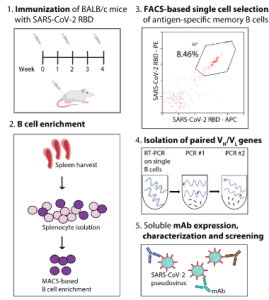
Antibodies can be found faster through single B cell screening. The antibody discovery process can be shortened to a few weeks through single B cell sorting. This pioneering approach involves isolating live cells from immunized animals or rehabilitated patients, classifying antigen-specific cell subpopulations, and recovering paired VH/VL antibody genes by RT-PCR and PCR; The encoded antibodies can be expressed and characterized to identify good performing clones, as shown in Figure 1.

Figure 1: A review of methods for isolating and identifying effective SARS-CoV-2 neutralizing antibodies from single B cells


The advantage of this method is that it uses the native antibody sequence with high somatic mutation and preserves the native VH/VL pairing. In addition, the discovery process is high-throughput, allowing further evaluation of the highly immune antibody library.

To evaluate the effectiveness of single B cell screening in isolating neutralizing antibodies against SARS-CoV-2 virus, we prepared a recombinant form of SARS-CoV-2 receptor-binding domain (RBD) in HEK293T cells and purified its protein. (Zhang Z et al.)

After immunizing BALB/c mice, anti RBD IgG1+B cells were isolated from spleen material by single cell sorting, and the VH /VL gene was treated. The resulting VH/VL gene pairs were cloned into mammalian expression plasmids (including the constant region of human IgG1 and the kappa light chain region for chimeric antibody expression) and transfected into HEK 293-6E cells instantaneously. Antibody identification includes the evaluation of Protein A magnetic beads’ purification, antigen-binding ability, neutralizing activity and other properties.

After the recombinant antibody is produced, its affinity must be analyzed for downstream applications. Antibody affinity detection methods include biofilm interferometry (BLI), solid phase radioimmunoassay (SP-RIA), equilibrium dialysis, binding antigen precipitation, radioimmunoassay (RIA), ELISA, and surface plasmon resonance (SPR).

RBD regions of SARS-CoV or SARS-CoV-2 with His labels were incubated separately with Dynabeads™ magnetic beads to detect the specificity of neutralizing antibodies. The two magnetic beads were incubated separately with different concentrations of antibodies, and the unbound magnetic beads were eluted. It was then incubated with Alexa Fluor®488 fluorescent secondary antibody (goat-derived, anti-human IgG, Fc fragment specific affinity purified secondary antibody, Jackson ImmunoResearch) and analyzed by flow cytometry.

B-cell screening has been shown to rapidly identify high-affinity, potent SARS-CoV-2 neutralizing antibodies. In addition, its use in combination with antibody modification is expected to be an effective strategy to prevent COVID-19.


References

Davis-Marcisak E F , Deshpande A , Stein-O’Brien G L ,et al.From bench to bedside: single-cell analysis for cancer immunotherapy[J].Cancer Cell, 2021, 39(8).DOI:10.1016/j.ccell.2021.07.004.

Zhang Z, Xu Q, Huang L. B cell depletion therapies in autoimmune diseases: Monoclonal antibodies or chimeric antigen receptor-based therapy? Front Immunol. 2023 Feb 10;14:1126421. doi: 10.3389/fimmu.2023.1126421. PMID: 36855629; PMCID: PMC9968396.


291 月/24

KMD Bioscience-A brief introduction to cell immortalization

Cell immortalization refers to the ability of a cell to bypass normal cellular mechanisms that limit its lifespan, allowing it to continuously divide and proliferate beyond the typical limits imposed on regular somatic cells. In normal cells, there are mechanisms in place, such as telomere shortening and checkpoints in the cell cycle, that eventually lead to senescence or programmed cell death (apoptosis) after a certain number of divisions.

Immortalized cells, on the other hand, have acquired genetic or molecular changes that enable them to overcome these limitations. One common mechanism of cell immortalization involves the activation of telomerase, an enzyme that maintains the length of telomeres, the protective caps on the ends of chromosomes. Telomerase prevents the progressive shortening of telomeres during cell divisions, allowing the cells to continue dividing without entering senescence or undergoing apoptosis.

Cell immortalization is a characteristic often associated with cancer cells, as many cancer cells have acquired the ability to proliferate indefinitely. However, it’s important to note that not all immortalized cells are cancerous, and there are non-cancerous cell lines that have been immortalized for research purposes, such as HeLa cells.

Understanding the mechanisms of cell immortalization is crucial in cancer research and has implications for studying aging, stem cell biology, and various diseases.

The KMD Bioscience Advantages:


1 Our commitment to advancing research is underscored by the integration of cutting-edge technologies in the cell immortalization. We employ sophisticated methodologies to ensure the reproducibility and stability of our cell lines, providing researchers with a consistent and reliable platform for their experiments.


2 Understanding the unique demands of diverse research projects, KMD Bioscience offers customized solutions in the generation of immortalized cell line. Whether you are studying autoimmune disorders, infectious diseases, or developing novel therapeutics, our team collaborates with you to tailor our services to your specific research objectives.


3 KMD Bioscience goes beyond providing cell lines; we offer comprehensive support throughout your research journey. Our team of experts is readily available to address inquiries, offer technical assistance, and ensure a seamless experience with our cell immortalization.


Join KMD Bioscience on the forefront of biotechnological innovation. Explore the unparalleled possibilities that our cell immortalization bring to your research, and let’s together pave the way for a future of groundbreaking discoveries in immunology and beyond.KMD Bioscience has a variety of cell immortalization systems that can provide customers with complete customized solutions. Please consult the official website of KMD Bioscience for detailed information.

291 月/24

KMD Bioscience-What is cell immortalization?

Cell immortalization refers to the process of bestowing cells with the ability to proliferate indefinitely. In normal cells, there is a limit to the number of times they can divide due to a phenomenon called cellular senescence. Senescence acts as a protective mechanism against uncontrolled cell growth and the development of tumors. However, in certain cases, particularly in cancer cells, the acquisition of immortality is critical for sustained growth and proliferation.

Cell immortalization plays a crucial role in biomedical research by providing a renewable source of cells for long-term studies. It has paved the way for significant discoveries in various fields, including cancer biology, drug development, tissue engineering, and regenerative medicine. By immortalizing cells, researchers can overcome the limitations of cellular senescence and delve deeper into the biological mechanisms underlying different diseases.

Several methods have been developed to achieve cell immortalization, each with its unique advantages and applications. One common approach is the use of telomerase, an enzyme responsible for maintaining the length of telomeres – the protective caps at the ends of chromosomes. Telomeres shorten with each round of cell division, eventually leading to senescence and cell death. Telomerase immortalization involves introducing the telomerase gene into cells, allowing them to continually replenish their telomeres and bypass senescence.

Another method involves the introduction of viral oncogenes, such as the SV40 Large T antigen or the human papillomavirus E6 and E7 genes, into cells. These oncogenes interfere with the cell cycle, promoting uncontrolled cell growth and preventing senescence. While this approach raises concerns about potential tumorigenic effects, it has proven useful in studying the early stages of cancer development and investigating molecular mechanisms involved in cell immortalization.

In recent years, advancements in cellular reprogramming techniques, namely induced pluripotent stem cell (iPSC) technology, have expanded the scope of cell immortalization. iPSCs can be generated by introducing specific combinations of transcription factors into mature cells, reverting them to a pluripotent state resembling embryonic stem cells. These iPSCs possess unlimited self-renewal capabilities, enabling the production of an endless supply of various cell types for research and therapeutic applications.

Cell immortalization has a wide range of applications in biomedical research. One crucial application is in cancer biology, where immortalized cancer cell lines serve as vital models for studying tumor initiation, progression, and responses to anticancer treatments. Additionally, immortalized cells have proven instrumental in drug discovery and testing. Researchers can use these cells to identify and screen potential therapeutic compounds more efficiently, providing insights into their mechanisms of action and optimizing treatment strategies.

Moreover, cell immortalization is invaluable for studying rare or difficult-to-obtain cell types. By immortalizing primary cells, researchers can overcome the challenges of sourcing and culturing these cells, ensuring a continuous supply for further experimentation. This is particularly important in stem cell research, where immortalized stem cells enable long-term culture and expansion, facilitating their study and potential therapeutic applications.

In conclusion, cell immortalization is a fundamental technique in biomedical research that has revolutionized our understanding of cellular processes and disease mechanisms. By overcoming the limitations of cellular senescence, researchers can investigate cell behavior over extended periods, leading to new insights into cancer biology, drug development, and regenerative medicine. The continued advancement of cell immortalization techniques promises to further expand our knowledge and drive innovative discoveries in the field of cellular biology.

Join KMD Bioscience on the forefront of biotechnological innovation. Explore the unparalleled possibilities that our cell immortalization bring to your research, and let’s together pave the way for a future of groundbreaking discoveries in immunology and beyond.KMD Bioscience has a variety of cell immortalization systems that can provide customers with complete customized solutions. Please consult the official website of KMD Bioscience for detailed information.